
Today's Moment
About Mass MomentsContact
Massachusetts Foundation for the Humanities
TimelineMap

Radio Moment
[play] [download]

Need help with audio file?

Listen to Mass Moments
on the radio.

Source Document

First person account, 1909

Links

Gillette is featured on the Boston History Collaborative’s “Innovation Odyssey.”

Mass Moment Regions

Map

This Mass Moment occurred in the Greater Boston region of Massachusetts.
 

Discussion Board

Discuss this and other Mass Moments on our discussion board.

There is currently 1 post on this moment.

Most recent post on:
11/16/2009 07:16
 

Find related moments by category:

Firsts
Inventions
Business
Industry

eMoments

Receive the daily Mass Moment in your email.
Sign up for eMoments.
 

Receive the daily
Mass Moment as a
Podcast or RSS Feed.
 

King Gillette Patents Safety Razor
Image Credit 

On This Day...
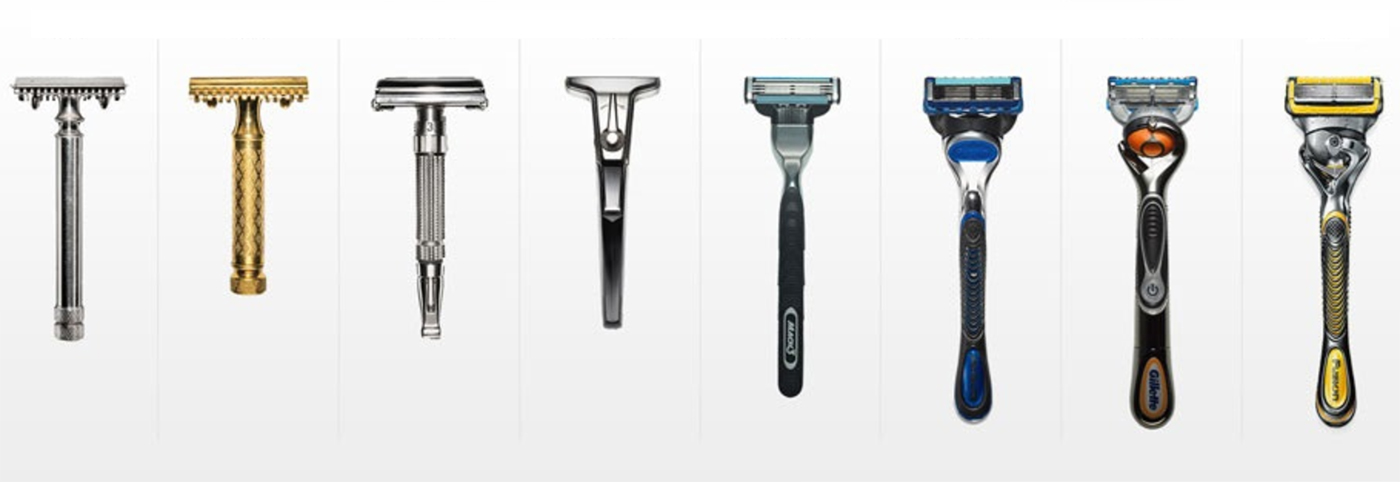
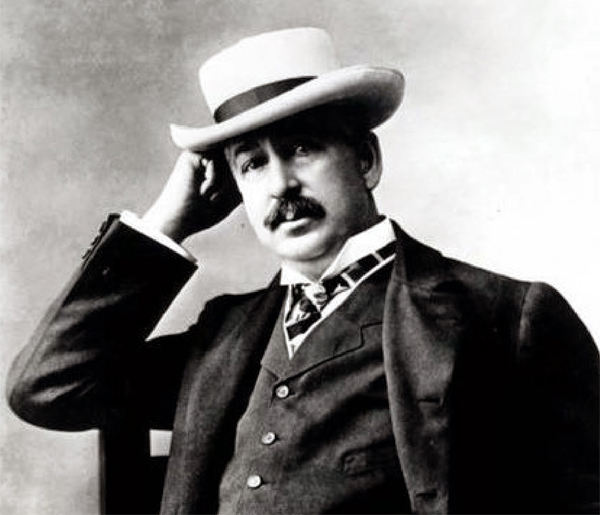
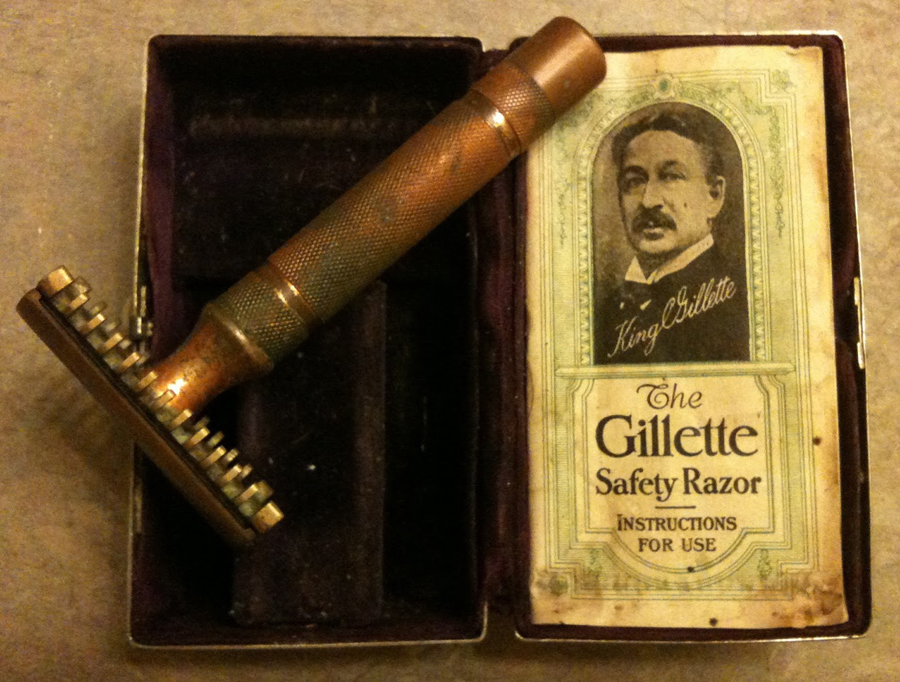
      ...in 1904, Boston-based inventor King Camp Gillette received a patent for an improved safety razor with a disposable blade. After almost 10 years of work, Gillette succeeded in mass-producing a sharp blade stamped from inexpensive sheet steel. He realized that profits lay in selling the razor for less than it cost to make and the disposable blades for more. His revolutionary idea has come to be known as the "Razor and Blades," or "loss leader," business model. Gillette was a marketing genius as well as a clever inventor. He introduced the practice of having professional athletes endorse a product and made sure that every American soldier went off to the First World War and returned home with a Gillette safety razor set.

Born in 1855 in Wisconsin, King Camp Gillette was raised in Chicago. When the rest of the family moved to New York City following the Great Chicago Fire of 1871, the youngest Gillette son chose to remain in Chicago. He got a job with a hardware wholesaler and began what would be a legendary career as a traveling salesman and inventor. Gillette built his reputation in Chicago, London, and New York, before moving to Boston, the hub of his new sales territory, in 1894.

As a traveling salesman for the Crown Cork and Seal Company, Gillette learned that disposable items meant steady sales and healthy profits. Crown's founder had invented the first major disposable product — the bottle cap. He advised the young Gillette to think of a product "which once used, is thrown away, and the customer keeps coming back for more — and with every additional customer you get, you are building a foundation for profit." The search for his a profitable throwaway product of his own would lead to the invention of the Gillette disposable blade.

Shaving in the late nineteenth century was a time-consuming chore involving a straight-edge razor that needed regular stropping on a leather strap. Even the "hoe-style" safety razors developed in the 1870s had forged steel blades that required stropping and re-sharpening by a professional barber or cutler. At home in Boston one morning in 1895, King Gillette found himself with a dull blade in need of re-sharpening. "As I stood there with the razor in my hand," he later remembered, "my eyes resting on it as lightly as a bird settling down on its nest — the Gillette razor was born."

From the beginning, he envisioned the disposable razor blade as wafer-thin and flexible; it would be mass-produced and have a sharp edge on both sides. The biggest challenge was getting the edges sharp enough to deliver a clean shave. Engineers from the Massachusetts Institute of Technology said it could not be done with sheet steel. After six years of failed experiments, Gillette met William E. Nickerson, an MIT-trained engineer, who solved the problem. In 1901 Gillette and Nickerson founded the American Safety Razor Company and opened their first factory in Boston.

In addition to pioneering the concept of disposability, Gillette developed new marketing techniques. He trademarked the use of his portrait and signature on the razor blade wrappers, making his face recognizable around the world by the 1920s. He introduced another innovation by signing Major League Baseball players to endorse Gillette razors. "Your baseball star . . . starts the day with a clean shave – and, like all self-reliant men, he shaves himself," the advertisements claimed.

World War I presented Gillette with another opportunity to increase sales. The company provided each serviceman with a field razor set that the government paid for; in 1918 alone, the U.S. military bought 3,500,000 Gillette razors. Tens of thousands of soldiers returned home from the war with government-issued Gillette razors and the habit of using disposable blades. In 1926 Gillette wrote proudly of his company's signature product, the safety razor, "There is no other article for individual use so universally known or widely distributed. In my travels, I have found it in the most northern town in Norway and in the heart of the Sahara Desert."

As his disposable razor blade was laying the foundation for a major American corporation, King Gillette himself was promoting the ideal of a social utopia. In The Human Drift, published in 1894, he proposed a collective, co-operative community; a single city powered by Niagara Falls would be so efficient that each resident would need to work only from age 25 to 30. He developed his ideas in two later books, including World Corporation, a prospectus for a company designed to fulfill his utopian vision.

The company remained a dream. Gillette's lasting impact has been his contribution to the development of a culture of disposability. The company he and William Nickerson founded became a corporate giant, with annual worldwide sales of $10 billion. On October 1, 2005, Cincinnati-based Procter & Gamble finalized its purchase of the Boston-based Gillette Company, creating the world's largest personal care and household products company.

Sources

Inventor of the Disposable Culture: King Camp Gillette, 1855-1932, by Tim Dowling (Short Books, 2001).


Discuss This Moment on Our Message Board
Recent Posts: New Topic  |   Search
Topic Originator Views Replies Most Recent Post
King Gillette doedoe 41 0 11/16/2009 07:16
by doedoe
 
Other discussions about this Moment: [go]

Discussion on other Moments: [go]
 
Teachers' Features
This past week's MomentsSundayMondayTuesdayWednesdayThursdayFridaySaturday
Massachusetts Foundation for the Humanities

©2010 Massachusetts Foundation for the Humanities. All rights reserved.