
Today's Moment
About Mass MomentsContact
Massachusetts Foundation for the Humanities
TimelineMap

Radio Moment
[play] [download]

Need help with audio file?

Listen to Mass Moments
on the radio.

Source Document

Campaign speech, 1910

Links

Website for American Experience documentary, “The Kennedys”

Mass Moment Regions

Map

This Mass Moment occurred in the Greater Boston region of Massachusetts.
 

Discussion Board

Discuss this and other Mass Moments on our discussion board.

There are currently 5 posts on this moment.

Most recent post on:
11/06/2008 08:26
 

Find related moments by category:

Politics
Industry

eMoments

Receive the daily Mass Moment in your email.
Sign up for eMoments.
 

Receive the daily
Mass Moment as a
Podcast or RSS Feed.
 

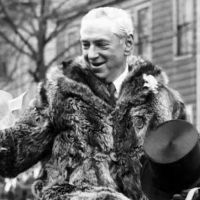
Boston’s “Honey Fitz” Fitzgerald Elected to Congress
Image Credit 

On This Day...
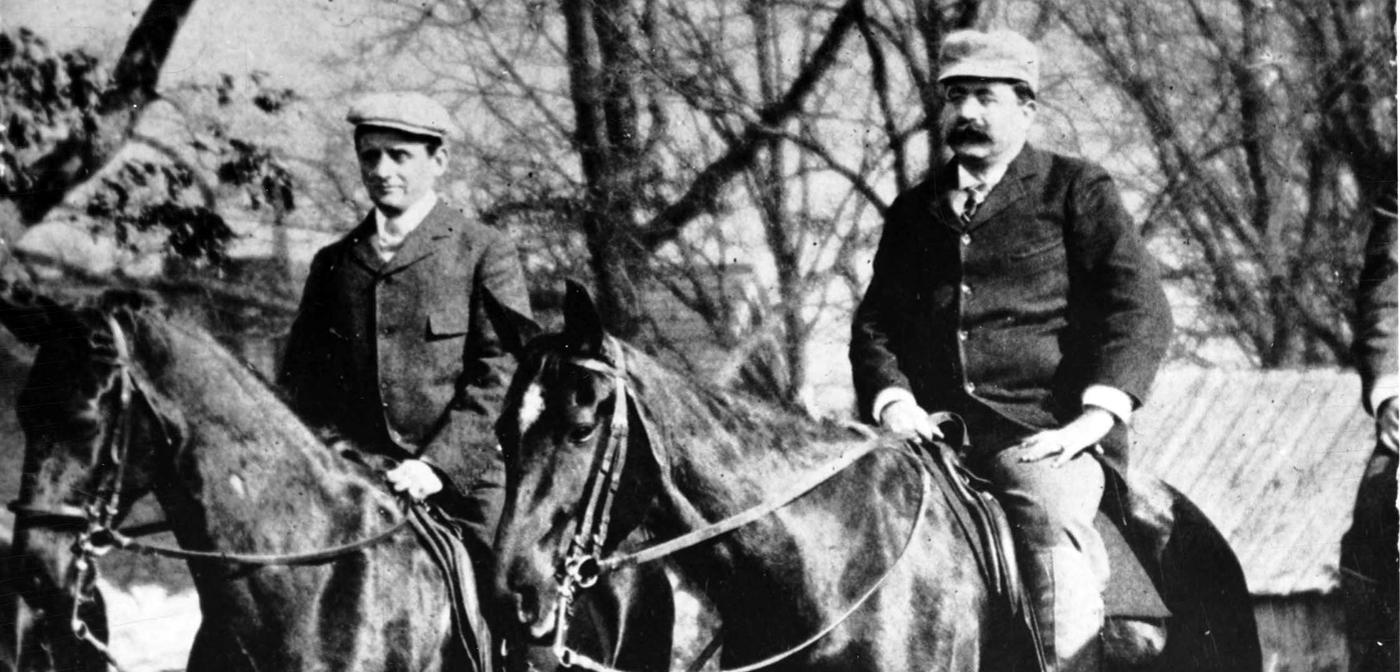
      ...in 1895, a colorful Irishman from Boston's North End, nicknamed "Honey Fitz" for his charming and loquacious ways, was elected to the U.S. Congress. Ten years later, John Francis Fitzgerald returned to Boston and ran for mayor. His victory rattled the Yankee establishment. He worked on behalf of the poor, immigrants, and workers, but his administration was rife with graft, cronyism, and corruption. After withdrawing from the 1914 mayoral campaign, Fitzgerald turned his attention to business and family. His daughter Rose had married Joseph Kennedy, and "Honey Fitz" devoted himself to grooming their sons for political careers. Three of them would serve in the U.S. Senate. His namesake, John Fitzgerald Kennedy, would be the35th President of the United States.

John Francis Fitzgerald, founder of an American political dynasty, was born in 1863 in the shadow of Boston's historic Old North Church. By then, the North End was no longer the fashionable enclave it had been in Paul Revere's day; it had become a ghetto for impoverished immigrants fleeing famine in Ireland. Fitzgerald's parents had settled there in the late 1840s. His father's grocery and liquor store supported the family of 13.

As a youth, the popular young John was called "Fitzie." He distinguished himself early on as a bright lad with an extraordinary work ethic, tremendous determination, confidence, and gregariousness. He was among the first Irish Catholic students to win a place at the prestigious Boston Latin School, where he excelled as a scholar, athlete, and student journalist. He dreamed of practicing medicine, a profession controlled by the city's Brahmin elite. He attended Harvard Medical School for a year but had to drop out when his father died. Even if he had become a doctor, it seems unlikely that Boston's Yankees would ever have embraced the feisty Irishman. Fitzgerald would seek his future among his own kind.

His first venture was selling insurance, and his sociable nature helped make him a success. He was a handsome man with an immaculate, dapper style of dress and extraordinary gifts as a public speaker. An avid reader with a fine memory, he could dazzle audiences with his informed opinions, presented in a blaze of eloquent oratory and a touch of what one reporter called "his consummate Irish charm." One newspaper printed a poem that began, "Honey Fitz can talk you blind on any subject you can find."

In 1892 Fitzgerald won election as a city councilman and began to establish himself as a political power in the North End. He set up the "Jefferson Club" in a shabby office and encouraged anyone with a problem to stop by for help. With prodigious energy, he placed constituents in jobs, delivered holiday food baskets to the needy, sent gifts to every newly married couple in the neighborhood, and never missed a North End wake. When he was campaigning, he made as many as ten speeches in a night, denouncing his opponents as anti-Catholic, anti-Irish, and anti-immigrant.

By 1893 Fitzgerald had been elected to the state senate. He increased his support among Italian immigrants by sponsoring a bill to make Columbus Day a state holiday. With this expanded power base, he shocked Yankee Boston three years later by winning a seat in the U.S. House. During his three terms in Congress, he opposed anti-liquor laws as "paternalistic" (although he himself was a non-drinker) and fought for immigrants and working people. When he objected to a bill that would have required new immigrants to be able to read the Constitution, an irate Senator Henry Cabot Lodge asked him, "Impudent young man. . . Do you think Jews or Italians have any right in the country?" Fitzgerald replied, "As much as your father or mine. It's only a difference of a few ships."

In 1905 Fitzgerald left Congress to mount a successful campaign for Mayor of Boston. He toured the wards in a large red car, an extraordinary sight at the time, proclaiming his slogan "Bigger, Better, Busier Boston!" With the help of powerful ward bosses, Fitzgerald became Boston's third Irish mayor.

Mayor Fitzgerald built a citywide political machine. He continued his work on behalf of the city's neediest residents; he also continued to tolerate, even promote, a political culture of graft and corruption. He created such unlikely new jobs as "rubber boot repairers," "tea warmers," and "watchmen to watch the watchmen" and gave them to his supporters, cronies, and relatives. In 1907 a candidate backed by a good government coalition defeated Fitzgerald, but three years later he won re-election.

In 1912 he found himself facing a wily Irishman from South Boston, James M. Curley. As soon as Curley announced that he would present a series of "educational" lectures with titles such as "Graft in Ancient and Modern Times" and "Great Lovers from Cleopatra to Tootles" (referring, as every Bostonian knew, to the blond cigarette girl Tootles Ryan, who was rumored to be Fitzgerald's mistress), "Honey Fitz" ended his campaign. He never won an election again.

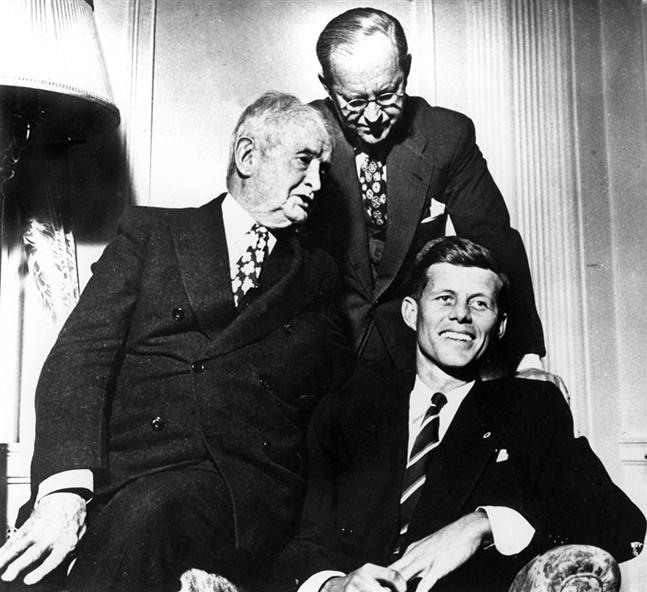
In his later years, Fitzgerald focused on his business interests and on honing the political instincts of his daughter Rose's promising sons. In 1948, when John Fitzgerald Kennedy decided to run for Congress, 85-year-old "Honey Fitz" helped him plan his campaign strategy. At the victory celebration, Fitzgerald danced an Irish jig, sang "Sweet Adeline," and predicted that his grandson would someday occupy the White House. Shortly after his election, John F. Kennedy renamed the presidential yacht the Honey Fitz in honor of his maternal grandfather.

Sources

Dictionary of American Biography, "John Francis Fitzgerald," Supplement V.

The Fitzgeralds and the Kennedys, by Doris Kearns Goodwin (Simon and Schuster, 1987).

"Honey Fitz": Three Steps to the White House; the Life and Times of John F. Fitzgerald, by John Henry Cutler (Bobb-Merrill, 1962).

"Political Boss: John F. "Honey Fitz" Fitzgerald," by David Wallechinsky and Irving Wallace, in The People's Almanac


Discuss This Moment on Our Message Board
Recent Posts: New Topic  |   Search
Topic Originator Views Replies Most Recent Post
Fitzgerald/Kennedys Vs The Lodges. Zinc 246 0 11/06/2008 08:26
by Zinc
James Curley Znhoward 580 1 10/31/2007 16:22
by Zinc
Dates Zinc 371 0 10/31/2007 16:19
by Zinc
Dates Joe Ross 451 0 11/06/2006 21:20
by Joe Ross
 
Other discussions about this Moment: [go]

Discussion on other Moments: [go]
 
Teachers' Features
This past week's MomentsSundayMondayTuesdayWednesdayThursdayFridaySaturday
Massachusetts Foundation for the Humanities

©2010 Massachusetts Foundation for the Humanities. All rights reserved.