
Today's Moment
About Mass MomentsContact
Massachusetts Foundation for the Humanities
TimelineMap

Radio Moment
[play] [download]

Need help with audio file?

Listen to Mass Moments
on the radio.

Source Document

Newspaper, 1982

Links

Whydah Museum

If You Go

Clifford's finds are on exhibit at the Whydah Museum in Provincetown.
 

Mass Moment Regions

Map

This Mass Moment occurred in the Southeast region of Massachusetts.
 

Discussion Board

Discuss this and other Mass Moments on our discussion board.

There are currently 0 posts on this moment.
 

Find related moments by category:

Disasters
Traditions
Maritime History

eMoments

Receive the daily Mass Moment in your email.
Sign up for eMoments.
 

Receive the daily
Mass Moment as a
Podcast or RSS Feed.
 

Underwater Explorer Proves Wreck is Whydah
On This Day...
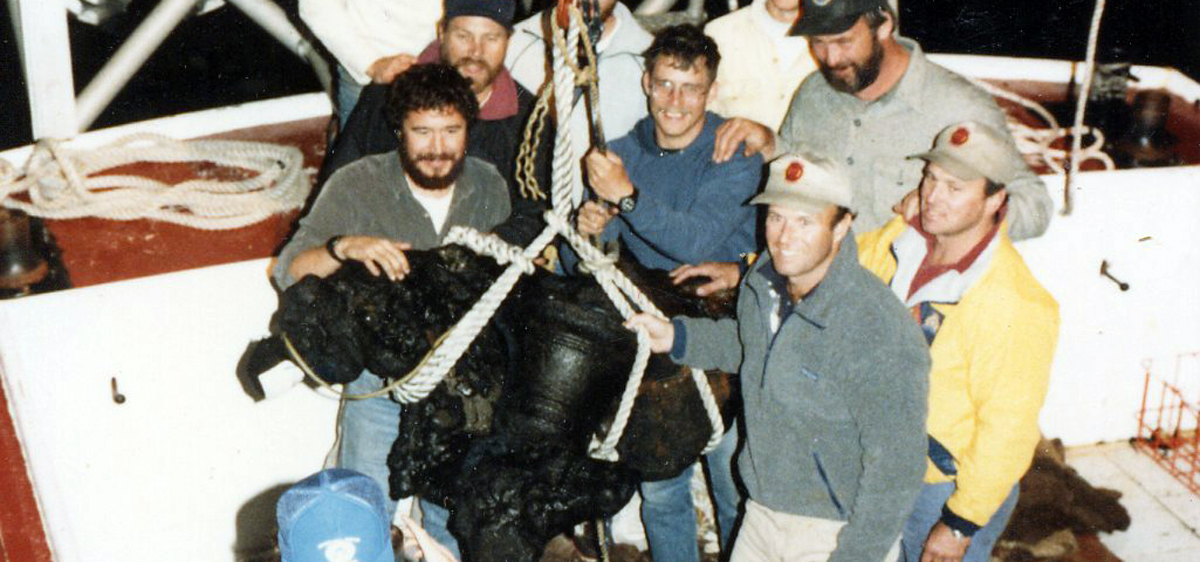
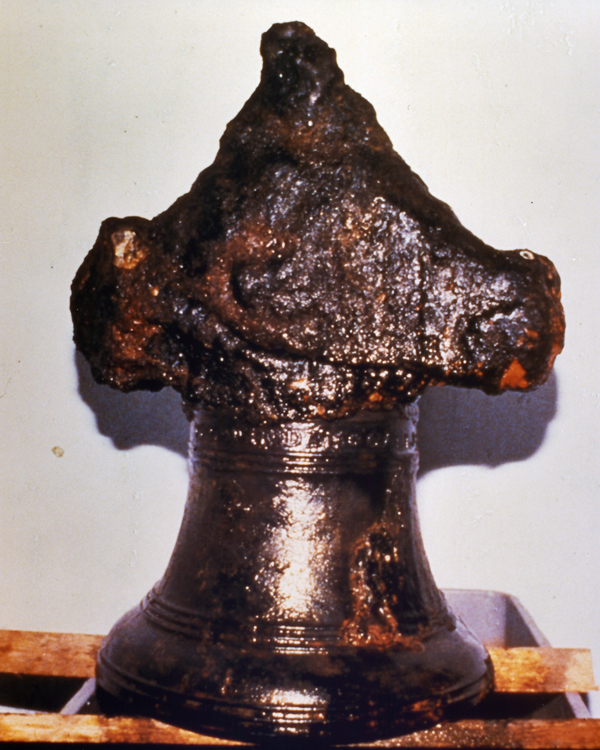
      ...in 1985, treasure hunter Barry Clifford finally had proof that the wreck he was salvaging off Cape Cod was indeed the pirate ship Whydah. Lost in a violent storm off Wellfleet in 1717, the Whydah had gone to the bottom within sight of shore. Tales of the treasure that sank with the ship filled Clifford's childhood. His dream of finding the wreck became an obsession. When divers began to bring up pieces of eight and gold from the right time period, he was convinced they came from the legendary ship. But only when the words "The Whydah Gally 1716" appeared beneath the encrusted surface of a bell did Barry Clifford know for sure that he had indeed found the Whydah.

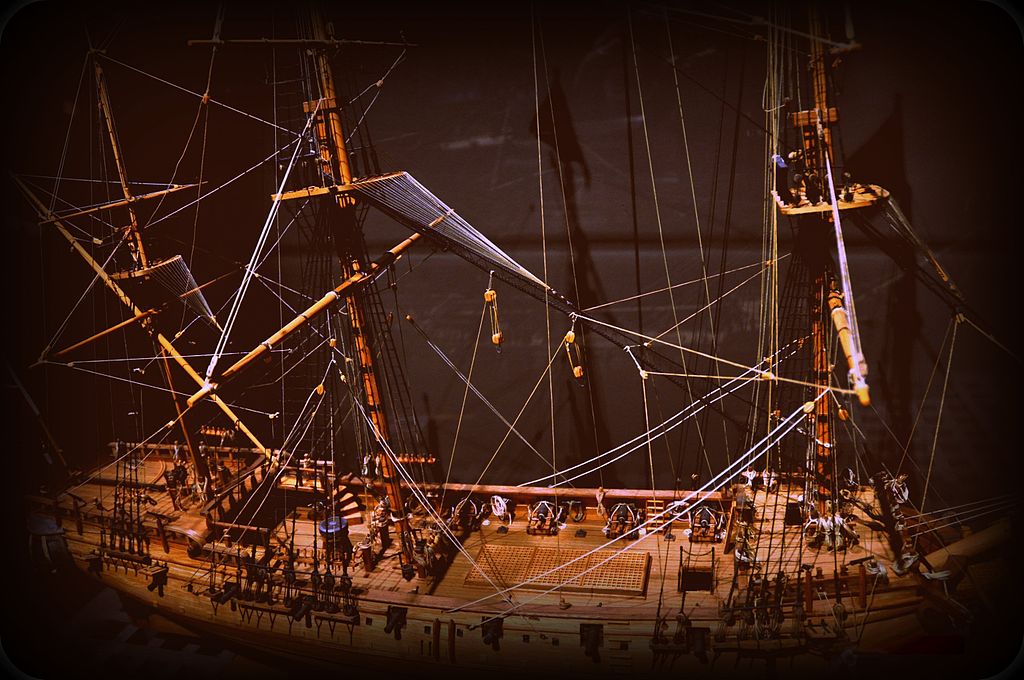
Growing up on Cape Cod, Barry Clifford loved to hear his uncle's tales of pirate ships and lost treasure. His favorite was the story of the Whydah, a 100-foot English merchant ship captured by the infamous New England pirate "Black" Sam Bellamy in 1716. After commandeering the Whydah, Bellamy filled the galley, which had carried slaves on its voyage from Africa to the West Indies, with treasure collected from months of piracy. It was an astonishing fortune: 30,000 pounds of silver, 10,000 pounds of gold, 20 tons of ivory and "enough precious jewels to ransom a Princess," according to one of the men aboard.

Bellamy was sailing his own ship, the Marianne, and the captured Whydah home to Cape Cod in April of 1717 when he encountered one of the worst Atlantic storms of the eighteenth century. In the grip of the powerful nor'easter, the Whydah slammed into a sandbar off Wellfleet and sank. Only two crewmen survived. Over the next few days, the bodies of over 100 pirates washed ashore, along with bits and pieces of the treasure. The shattered ship and most of the booty quickly disappeared under shifting sands. For the next 250 years, it remained out of reach of treasure hunters and salvagers.

Barry Clifford was determined to find the Whydah and her treasure. Beginning in 1981, he dedicated all his energies to the hunt. For the next four years, his business and marriage suffered as he single-mindedly studied old records, consulted with experienced treasure hunters, mapped the area with special metal detecting equipment, and recovered pieces of iron that he believed might have been from the ship. He secured permits from the state to conduct underwater archeology, and crisscrossed the country raising money for an underwater dig. In November of 1982, Clifford "staked his claim" to the site in U.S. District Court, seeking the right to keep any treasure he might uncover. His request was granted; now he had to find the wreck.

Many people believed the story of the Whydah was only a legend; others were sure that the treasure had long ago been stripped from the wreck, or that the remains were too deep and too scattered ever to be recovered. Clifford persisted, studying documents that referred to the original site of the wreck, using old maps to take into account how the shoreline had shifted, and employing special metal-detecting equipment to pinpoint his search. Finally, he anchored his 70-foot boat over the spot where he believed the wreck lay. With two huge cylinders powerful enough to blow the sand on the ocean floor into 15-foot craters, he found what he was looking for.

Over the next two summers, Clifford and his team recovered millions of dollars worth of coins, artifacts, and gold dust. Clifford claimed this was just the beginning, but he still had no proof the loot came from the Whydah. Finally, divers brought up a bell; after archaeologists worked to gently clean encrusted material from the bell's surface, the fateful words appeared — "The Whydah Gally 1716."

Clifford and his team continued to bring up treasure from the wreck, but they still faced a huge challenge. The state of Massachusetts went to court, claiming joint ownership of the Whydah and the right to regulate the salvage operation. Clifford's lawyers argued that his federal permit superseded the state's claim. The dispute was not resolved until 1988; Clifford won the case, and the treasure was legally his.

Clifford has mapped the site, conserved hundreds of thousands of artifacts recovered from the wreck, and displays about 200 of them in a small traveling exhibit; the rest are stored at the Expedition Whydah Sea-Lab and Learning Center in Provincetown. His exploration team continues to recover new material from the wreck during each summer's dive season.

In 2006 researchers reported an intriguing find: a bone, silk stocking, and shoe of a ten- or 11-year-old boy, the youngest pirate ever identified. Eighteenth-century court records and modern forensics strongly suggest that the boy was John King, who was sailing with his mother from Antigua to Jamaica when Sam Bellamy attacked and plundered their ship in November of 1716. According to a document found in a London archive, young King "declared he would kill himself" if he was not allowed to join Bellamy's crew. Bellamy agreed, and John King was aboard the Marianne when she captured the Whydah. Both the legendary pirate and the boy died when the Whydah sank.

In July of 2007, the team discovered more than two dozen cannons, all taken from ships captured by the Whydah, buried beneath ten feet of sand only 2,000 feet off shore. Clifford had already recovered most of the the Whydah's original 22 to 28 cannons. "We had no idea that there were 30 extra cannons on board this ship," Clifford told the Boston Globe."Every time we go down there, we find another tip of another iceberg."

Sources

Expedition Whydah, by Barry Clifford with Paul Perry (Harper Collins, 1999).

Finding New England's Shipwrecks and Treasure, by Robert Ellis Cahill (Salt Box Publishing, n.d.).

Treasure Wreck: The Fortunes and Fate of the Pirate Ship Whydah, by Arthur T Vanderbilt (Houghton Mifflin, 1986).

Boston Globe, August 24, 1986, June 2, 2006, and July 18, 2007.


Discuss This Moment on Our Message Board
Recent Posts: New Topic  |   Search
Topic Originator Views Replies Most Recent Post
 
Other discussions about this Moment: [go]

Discussion on other Moments: [go]
 
Teachers' Features
This past week's MomentsSundayMondayTuesdayWednesdayThursdayFridaySaturday
Massachusetts Foundation for the Humanities

©2013 Massachusetts Foundation for the Humanities. All rights reserved.