Today's Moment
About Mass MomentsContact
Massachusetts Foundation for the Humanities
TimelineMap

Radio Moment
[play] [download]

Need help with audio file?

Listen to Mass Moments
on the radio.

Source Document

Advertisement, 1801

Links

“The Bowditch Initiative” is a project of Historic Salem, Inc.

If You Go

Peabody Essex Museum has Bowditch material in its collections.

Salem Maritime National Historic Site


Discussion Board

Discuss this and other Mass Moments on our discussion board.

There are currently 8 posts on this moment.

Most recent post on:
04/24/2011 22:56
 

Find related moments by category:

Firsts
Science
Maritime History

eMoments

Receive the daily Mass Moment in your email.
Sign up for eMoments.
 

Receive the daily
Mass Moment as a
Podcast or RSS Feed.
 

Teachers' Features

This Moment is part of
a Teachers' Features
lesson plan.

Using Mass Moments in Third Grade Classrooms
A. science and technology


Harvard Awards Bowditch Honorary Degree
Image Credit 

On This Day...
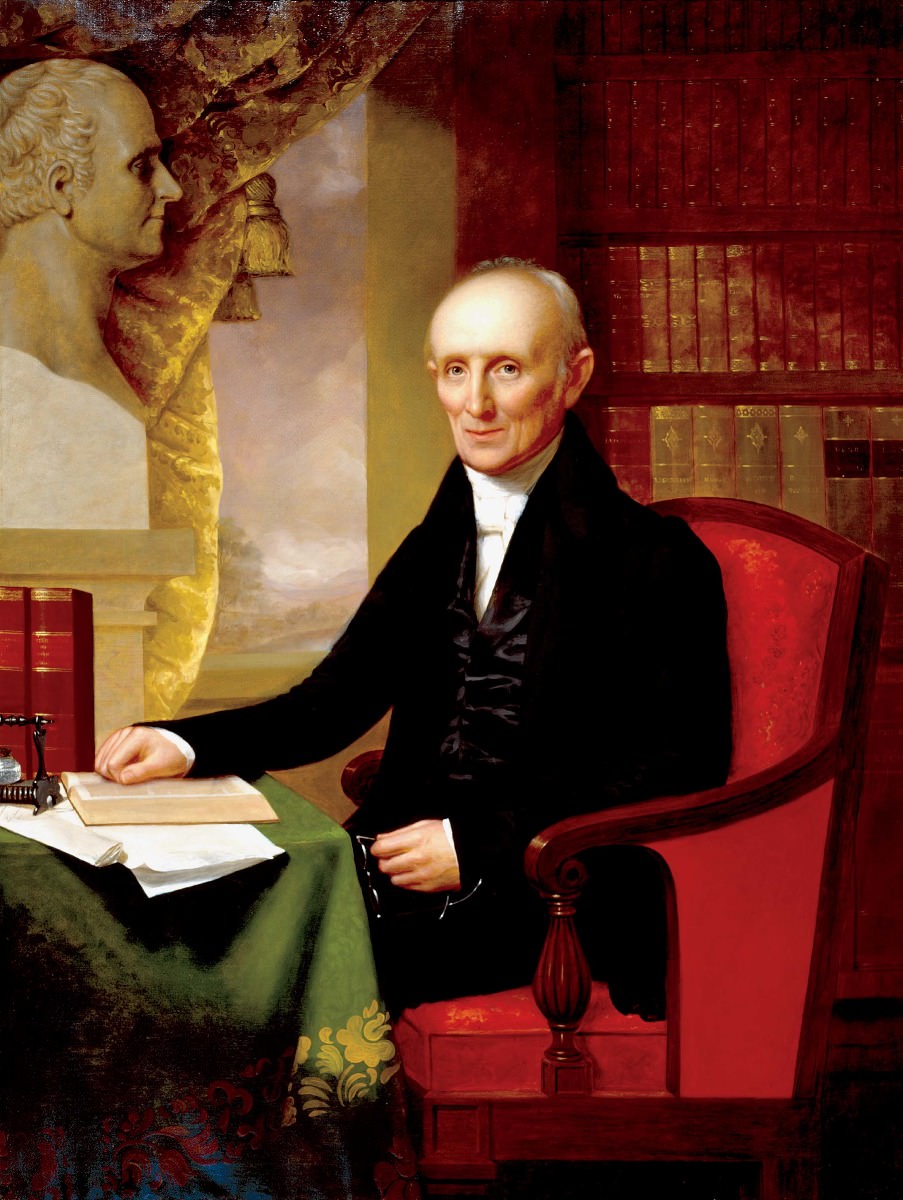
      ...in 1802, Harvard College awarded Nathaniel Bowditch an honorary Master's Degree. The Salem-born astronomer, mathematician, and navigator was almost entirely self-educated. His formal schooling ended when he was ten. While apprenticed to a ship chandler, he taught himself mathematics, astronomy, Latin, Greek, and French. Later, during his years at sea, he began working on The New American Practical Navigator, the first complete and accurate handbook of navigation tables. The Practical Navigator was published in 1802. It is still in print, and in use, over two centuries later. Tradition has it that no sailor left port without a Bible, a chest of clothes, a mother's blessing, and his copy of Bowditch.

Nathaniel Bowditch was born on March 26, 1773, the fourth of seven children of Habakkuk and Mary Ingersoll Bowditch. His father had once been a sea captain but now struggled to support his family as a barrel maker. At twelve, the boy began serving an apprenticeship with a ship chandler. He was fascinated by the equipment and supplies he sold to seamen and the stories they told and eager to learn more about the world. Nathaniel set out to educate himself.

Recognizing the young man's intelligence and drive, a number of Salem's leading citizens gave him access to their personal libraries and arranged for him to borrow books from the private Philosophical Library Society.

He was in his early 20s when his apprenticeship ended. Like countless Salem lads before him, Bowditch went to sea. In 1795 he set out on the first of five voyages he would make to the East Indies. Before leaving home, he read journals and studied navigation techniques. While at sea, he spent whatever free time he had poring over John Hamilton Moore's book of navigational tables that was used on most ships at the time. He found and corrected 8,000 errors.

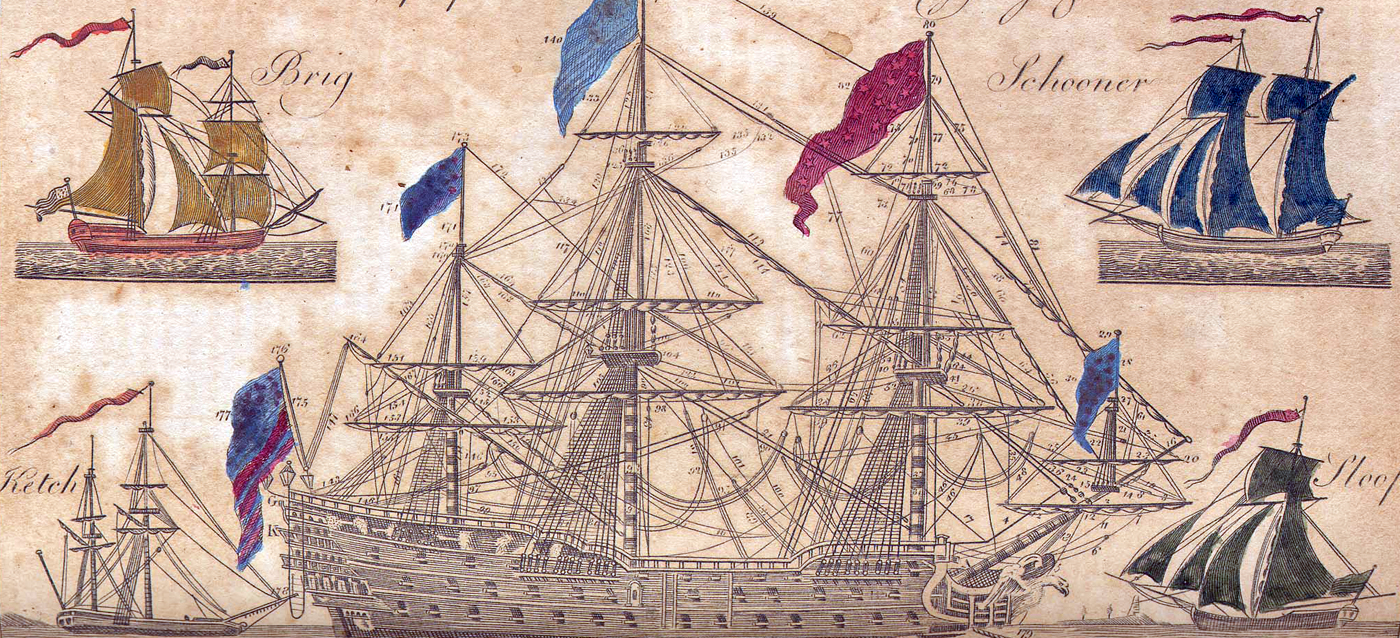
Between voyages, he published two revisions of Moore's book. By 1801 he had made so many improvements to the original that that an entirely new version was published under his own name. Written specifically so that a sailor with limited education could follow it, Bowditch's The New American Practical Navigator was the first complete and accurate handbook of navigation tables. It provided data on wind speeds and patterns, notes on ocean currents, directions on how to calculate tides, reliable mathematical techniques for fixing locations at sea, a glossary, explanations of rigging, guidance on how to keep a ship's journal, and, of course, extensive instructions on navigation. The London Athenaeum called it the best work of its kind ever published in Britain or the United States.

By the time Bowditch took his last trip to the Indies in 1803, he had attained the rank of captain. But his seafaring days were over. The success of the Practical Navigator won him an invitation to teach at Harvard; later Thomas Jefferson sought him out for the University of Virginia, and West Point was interested, too. Bowditch declined all the offers, preferring to work in business. His position as president of the Essex Fire and Marine Insurance Company gave him the financial security and the time he needed to pursue his other interests.


Bowditch was a founding member of the East India Marine Society, formed in 1799 to assist widows and orphans of Salem's captains and for the "improvement of navigation." Society members also established one of the oldest museums in the United States, now called the Peabody Essex Museum, with artifacts from their voyages to distant lands.

Bowditch encouraged sea captains to keep logs that were as detailed as possible, recording not only latitude and longitude but also navigational hazards and places to take on food and water. The Society duplicated the logs and made copies available to other mariners.

After 20 years with Essex Fire and Marine, Bowditch accepted a position with the Massachusetts Hospital Life Insurance Company in Boston. His salary was five times what he had earned in Salem — a major factor given the immense project he had undertaken. He was publishing his own translations of the eminent French astronomer Pierre Laplace's monumental Traité de Méchanique Céleste. The five-volume work addressed Newton's theory of gravitation and its application to astronomy. It also included the research of prominent European scientists. Bowditch did not simply translate Laplace. For every two pages of the original, he added three pages of annotations.

Bowditch devoted the last two decades of his life to his work on Mecanique Celeste, thus giving English-speaking scientists access to the latest research being done in Europe. The volumes became an essential part of the education of those who succeeded Bowditch.

When Nathaniel Bowditch died in 1838, the Boston Athenaeum predicted accurately that "his fame is of the most durable kind, resting on the union of the highest genius with the most practical talents, and the application of both to the good of his fellow man." He is buried at Mount Auburn Cemetery in Cambridge. A life-size bronze statue of him was erected there in 1846.

Sources

American National Biography, Vol. 3 (Oxford University Press, 1999).

"Nathaniel Bowditch, Scientist," by Jim McCallister in "Salem Tales."

"Salem's Stellar Scientist: Nathanial Bowditch, An Appreciation," by Mildred Berman, SEXTANT, The Journal of Salem State College, Vol. III, No.1, 1996.


Discuss This Moment on Our Message Board
Recent Posts: New Topic  |   Search
Topic Originator Views Replies Most Recent Post
Salem History Son of Salem 922 2 04/24/2011 22:56
by Anonymous
Bowditch: a classic Znhoward 1101 4 04/24/2011 22:56
by Anonymous
 
Other discussions about this Moment: [go]

Discussion on other Moments: [go]
 
Teachers' Features
This past week's MomentsSundayMondayTuesdayWednesdayThursdayFridaySaturday
Massachusetts Foundation for the Humanities

©2013 Massachusetts Foundation for the Humanities. All rights reserved.