
Today's Moment
About Mass MomentsContact
Massachusetts Foundation for the Humanities
TimelineMap

Radio Moment
[play] [download]

Need help with audio file?

Listen to Mass Moments
on the radio.

Source Document

Newspaper, 1925

If You Go

Many of Historic New England's properties are open to the public.
 

Mass Moment Regions

Map

This Mass Moment occurred in the Greater Boston region of Massachusetts.
 

Discussion Board

Discuss this and other Mass Moments on our discussion board.

There are currently 3 posts on this moment.

Most recent post on:
06/28/2010 07:24
 

Find related moments by category:

Architecture

eMoments

Receive the daily Mass Moment in your email.
Sign up for eMoments.
 

Receive the daily
Mass Moment as a
Podcast or RSS Feed.
 

Otis House Moved
Image Credit 

On This Day...
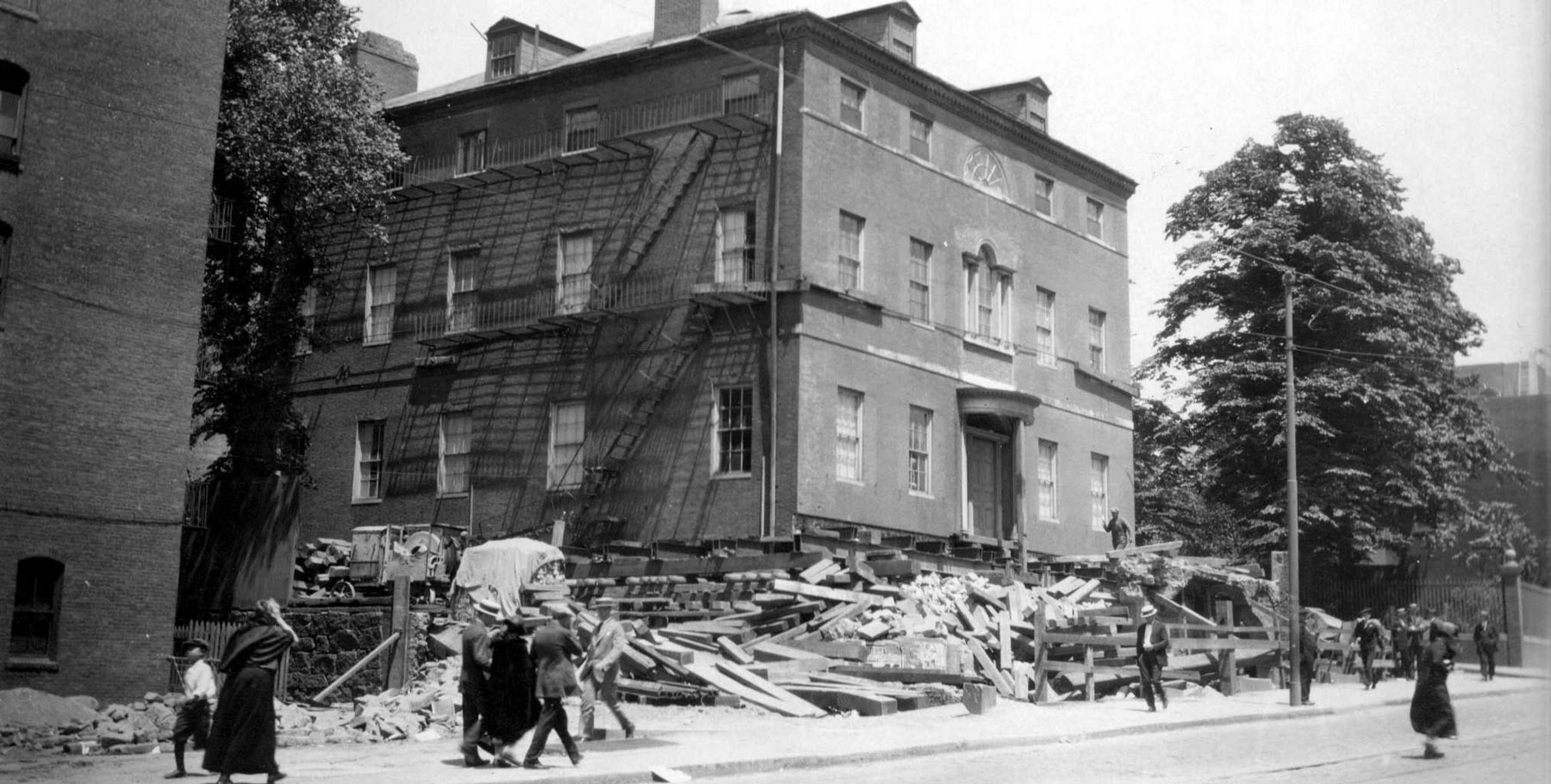
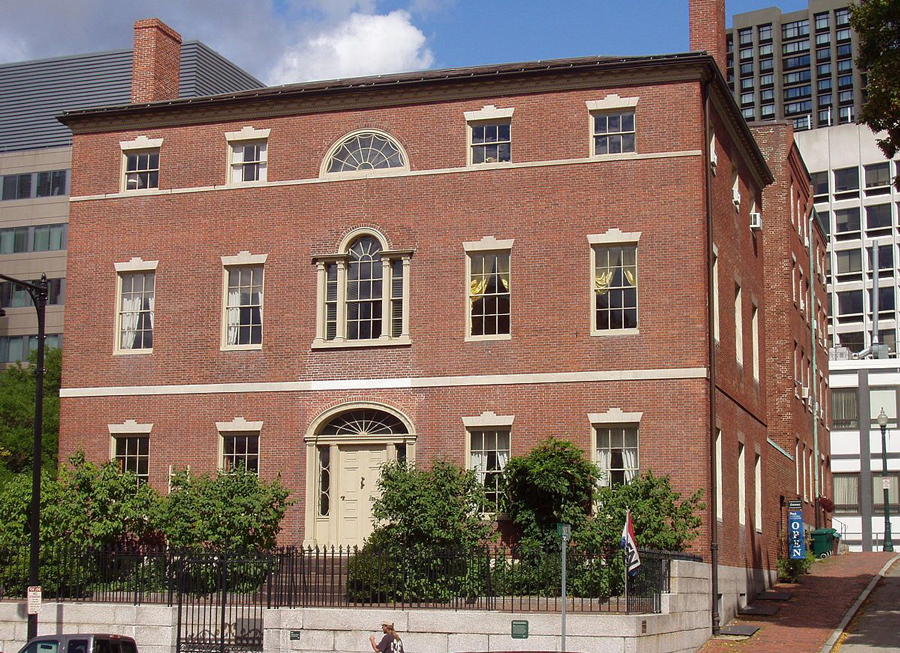
      ...in 1925, workmen finished moving an historic Beacon Hill residence back from the brink of destruction. Cambridge Street was slated to be turned from a crooked cobblestone street into a wide thoroughfare, and the Harrison Gray Otis House was in the way. Fortunately, it belonged to the Society for the Preservation of New England Antiquities. Founded 15 years earlier, the Society had already saved five historic properties from the wrecking ball. Now its own home was threatened. In an old New England tradition, the house was jacked up and moved. It has continued ever since to serve as the headquarters of what is now called Historic New England, the oldest and largest regional historic preservation organization in the nation.

Early New Englanders were accustomed to moving buildings around, as one man put it, just like "checkers on a checker board." Given the relatively high cost of building materials and the labor involved in post-and-beam construction, many buildings were valuable enough to be worth moving.

Sometimes physical changes — for example, a new road or bridge — made a new location more convenient. Farmers often moved sheds and other outbuildings in order to enlarge their houses or barns or make improvements in keeping with the latest in domestic and farming trends. In the early nineteenth century, many churches were jacked up and turned 90 degrees to transform their old "meetinghouse" profile into the newly fashionable "Greek revival" temple style. But most buildings that were moved had simply gotten in the way of change.

After the Civil War, Boston experienced a building boom. With the development of new neighborhoods such as the Back Bay, hundred-year-old buildings on the narrow winding streets of the city's downtown came to be seen as eyesores and firetraps. The real estate was now far more valuable than the buildings. Rather than move old buildings, developers demolished them to create wider streets and erected new structures equipped with indoor plumbing, electric lights, and other "modern" conveniences.

The notion that change represented progress was rarely questioned. In time, however, some Bostonians began to worry about the virtual erasure of the old city. "Bostonians who have been absent from their native city for a few years return to express astonishment as they regard the rapid growth of the city," wrote one observer in 1872. "Old landmarks and localities have almost completely disappeared. . . ."

The new city could seem alarmingly unfamiliar to longtime Bostonians. Many linked the disappearance of ancient landmarks with the fading of Yankee cultural dominance. As buildings that had "heroic histories" (usually associations with events of the Revolution) came under threat, groups of citizens organized to save them. Following the example set by the Virginia women who saved Mt. Vernon, groups formed to rescue Faneuil Hall, the Old State House, Park St. Church, and Paul Revere's house from demolition. But for each success, there were as many failures. Many of the city jewels, such as John Hancock's mansion, were lost.

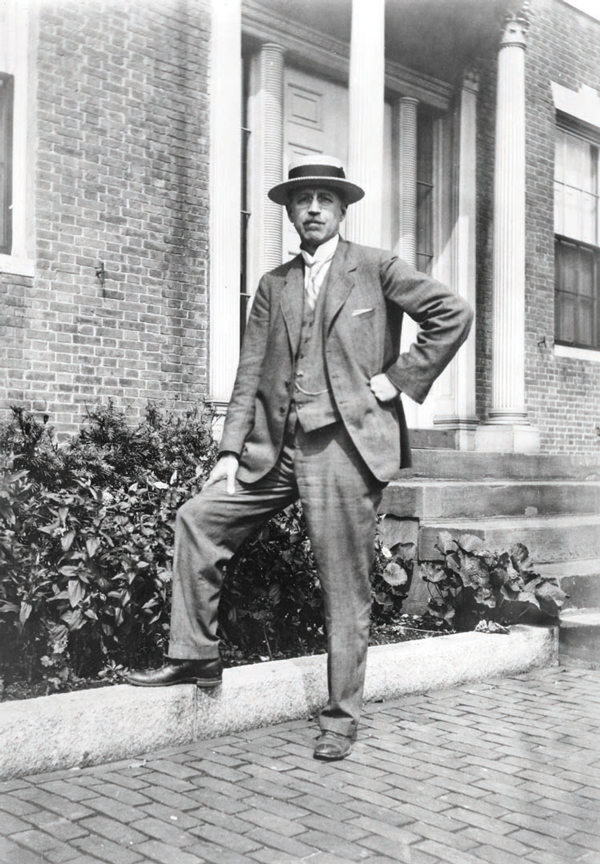
The father of this early historic preservation movement was William Sumner Appleton. A member of an old and wealthy Boston family, Appleton helped save the Revere house — and found his life's calling. Appleton was independently wealthy and chose to devote his considerable energies to historic preservation. In 1910 he founded the Society for the Preservation of New England Antiquities, the first preservation organization with a regional focus in the country. By the time he died in 1947, SPNEA had preserved 51 historically significant buildings.

Appleton brought a novel approach to historic preservation. He believed that the value of a building lay in its architectural qualities as much as its historical significance. He acknowledged that the value of a building increased if important events had occurred there, but he was also keenly interested in buildings that had no particular "heroic associations." William Sumner Appleton introduced the idea that a building was as much an historical artifact as a spinning wheel or a musket.

Recognizing the value of rural places, he was also concerned about the loss of farmsteads, abandoned by families looking for greater opportunities out west or in the city. He advocated a comprehensive program designed to protect a cross-section of the region's architecture.

Appleton took a systematic and pragmatic approach. He developed a careful system of documentation, including precise measurements, drawings, and photographs. Although he initially focused only on structures from the seventeenth century, he gradually expanded SPNEA's mission to acquire buildings from later periods.

In 1916, with financial support from 15 wealthy Bostonians, Appleton purchased the Harrison Gray Otis House for the Society's headquarters. Designed by Charles Bulfinch in 1796, the handsome brick home stood on Cambridge Street at the foot of Beacon Hill.

Nine years later, the headquarters building was in the way of a street-widening project. Demolition was not the SPNEA way. A company was hired to move the house back nearly 43 feet. At the rate of seven feet a day, it took nearly a week to get the building onto its new foundation.

Operating out of this same house, Historic New England manages 120 buildings on 40 properties in five New England states, as well as a research library and extensive collection of historical artifacts.

Sources

Windows on the Past: Four Centuries of New England Homes, by Diane Viera, Jane C. Nylander, and Wendell Garrett (Bulfinch, 2000).

Boston's "Changeful Times": Origins of Preservation and Planning in America by Michael Holleran (Johns Hopkins University Press, 1998).

"William Sumner Appleton and the Society for the Preservation of New England Antiquities," by Nancy Coolidge and Nancy Padnos, Antiques, March 1986.


Discuss This Moment on Our Message Board
Recent Posts: New Topic  |   Search
Topic Originator Views Replies Most Recent Post
Opening discussions doedoe 28 0 06/28/2010 07:24
by doedoe
moving houses rhody 635 1 06/27/2009 10:40
by MassBorn
 
Other discussions about this Moment: [go]

Discussion on other Moments: [go]
 
Teachers' Features
This past week's MomentsSundayMondayTuesdayWednesdayThursdayFridaySaturday
Massachusetts Foundation for the Humanities

©2010 Massachusetts Foundation for the Humanities. All rights reserved.